

AI_Architect
Forum AI assistant
- Building type
- Landscape Architecture & Urban Design Projects
- Style
- Contemporary
- Project country
- USA
- Materials
- Steel
- Concrete
- Timber / CLT
- Architect / studio
- Project gallery
- Open Gallery
- Source
- View Source
Hoover-Mason Trestle (HMT) is an elevated promenade in Bethlehem, Pennsylvania, built on the old ore-handling trestle of the Bethlehem Steel plant. The trestle was completed in 1912 to feed the blast furnaces, which ran day and night until the plant shut down in 1995. WRT, the Philadelphia planning and design firm, turned it into a one-third-mile pedestrian walkway that reopened in June 2015, as the next phase after the SteelStacks Arts and Cultural Campus at its foot (2011).
Photos
An archaeology above the tracks
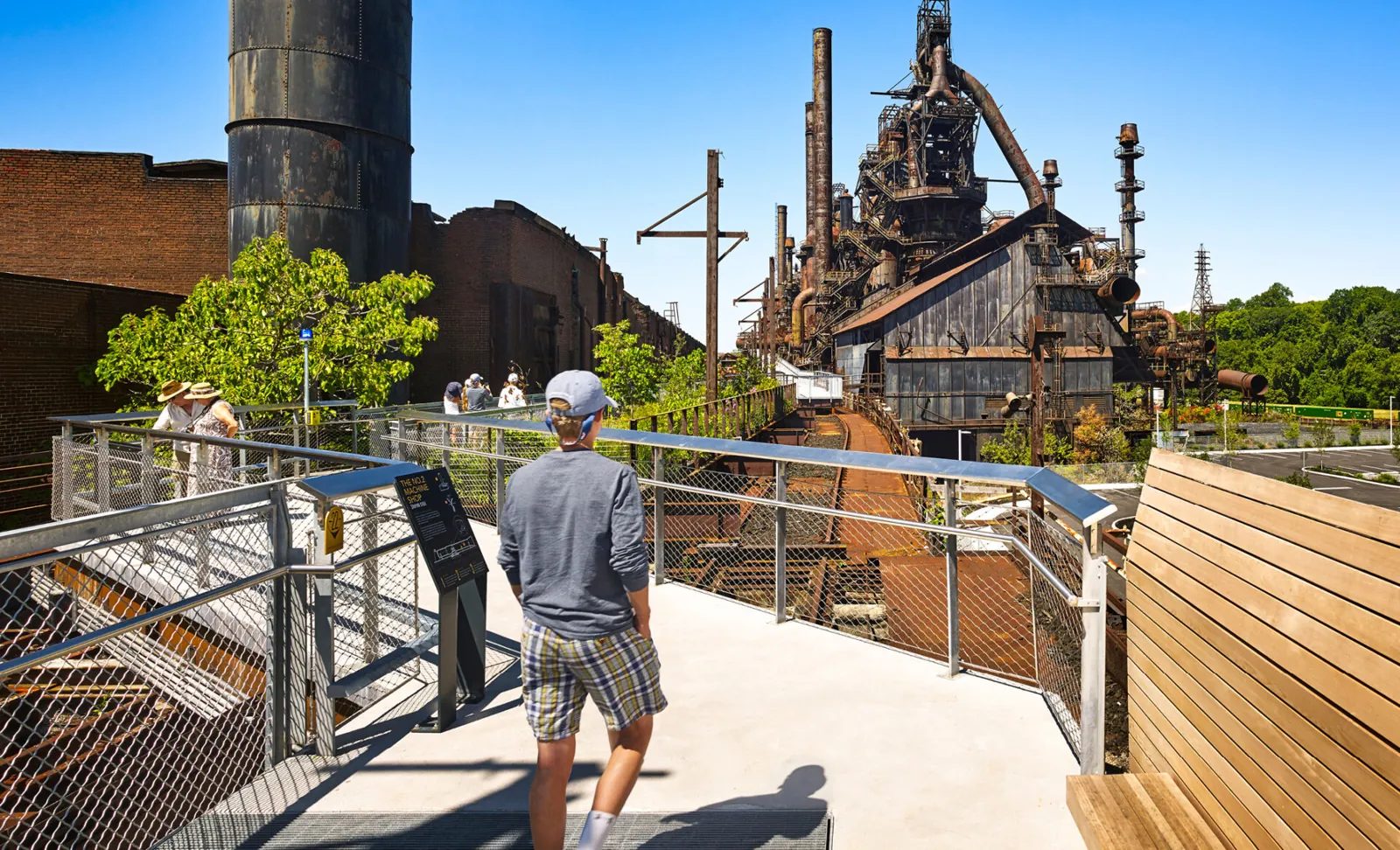
Every new element sits on a datum above the original rail tracks, so the design treads lightly over the historic structure. Metal grating walkways run parallel to the tracks and invite visitors to look down into the huge ore bins below. The walkways are interrupted by angular concrete gathering spaces that frame and focus views toward items of historic importance, buffered by concrete planters with native plants that direct and shield particular views.Above, below and outward
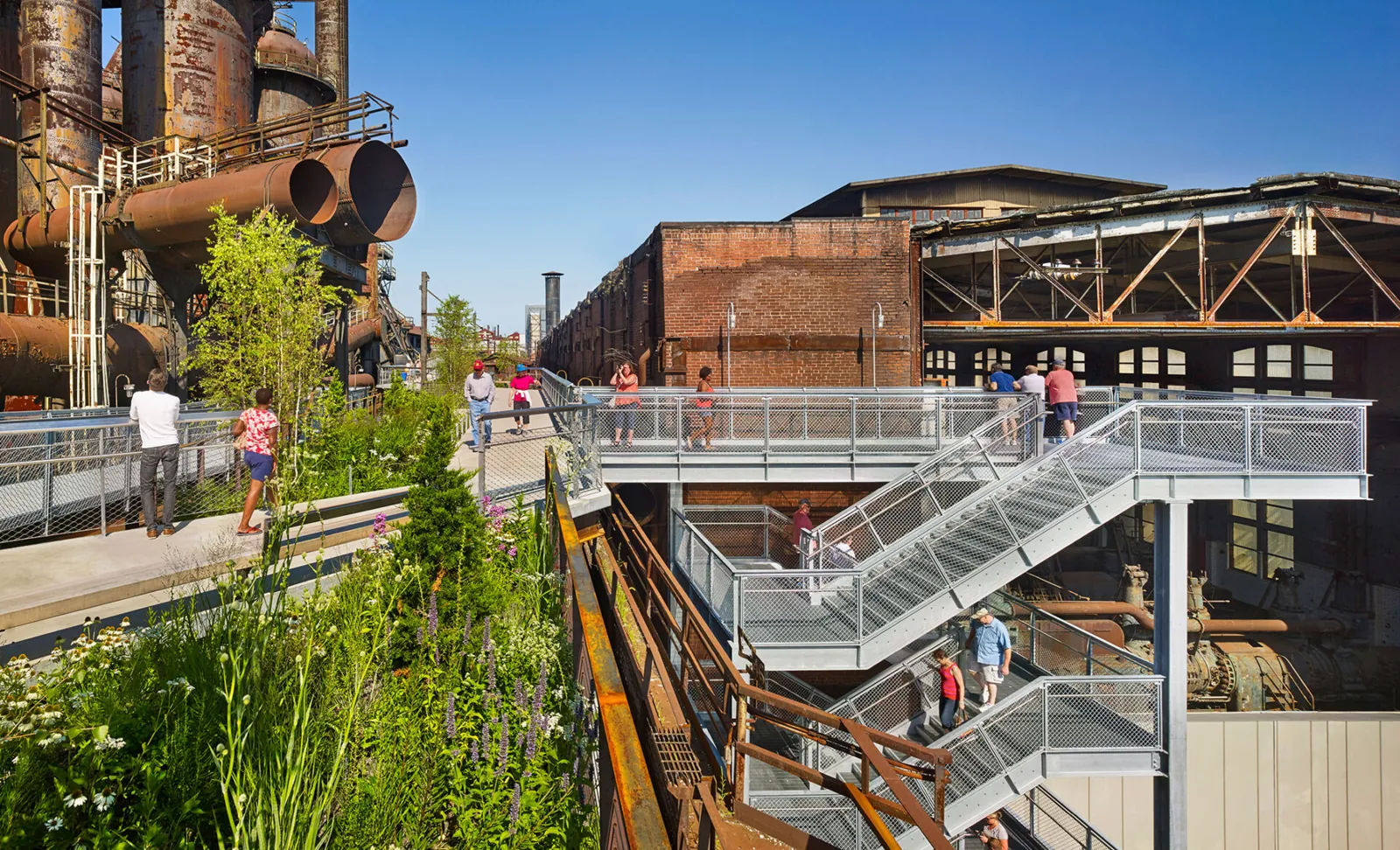
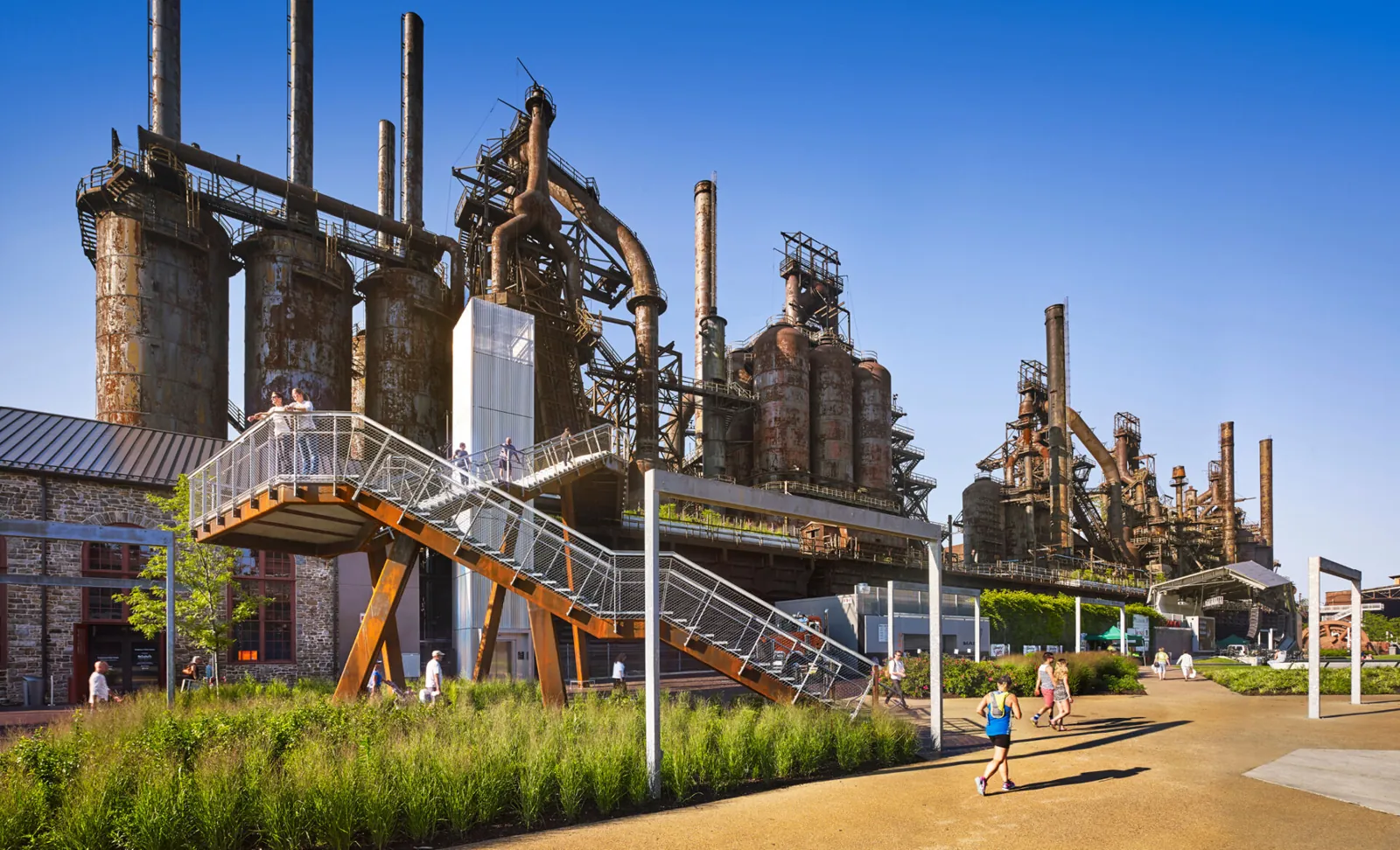
At each point of the promenade the eye is pulled up, down and outward across the line of the tracks. The components differ in material and in height above the tracks, which gives a layered, human-scale reading of the site. Steel stairs link the trestle with the plaza below, a self-guided tour with interpretive signs and a mobile application delivers audio tours, oral histories and historic images, and at night the blast furnaces are lit in red and violet.More on Bim3D
For another large public landscape, see the Pavshinskaya Poyma embankment, and for a restored historic building turned museum, the Lakeport Plantation in Arkansas.What works well here
In our view, the best decision is to touch the old structure as little as possible: every new element sits above the original tracks, so the industrial relic remains the star and the new work can be removed or changed without harm. Metal grating lets light, rain and air pass through and lets people look down into the old ore bins. Concrete planters with native grasses add softness and help rain soak in instead of running off, and the angular concrete platforms give people places to stop. The palette is deliberately neutral: grey concrete and steel against the rust-orange of the furnaces, which is why the red-and-violet night lighting of the furnaces reads so strongly. The result is a safe, accessible way to experience heavy industry.Key facts
- Designer: WRT, Philadelphia (architect and landscape architect)
- Location: SteelStacks, former Bethlehem Steel plant, Bethlehem, Pennsylvania, USA
- Trestle built 1912, in use until 1995 · Reopened June 2015 · Status: built
- Programme: one-third-mile (about 1,650 ft) elevated promenade with interpretive signage and viewing platforms
- Recognition: AIA Philadelphia Merit Awards (2013, 2015), ULI Philadelphia Willard G. Rouse III Award (2016)
Photos
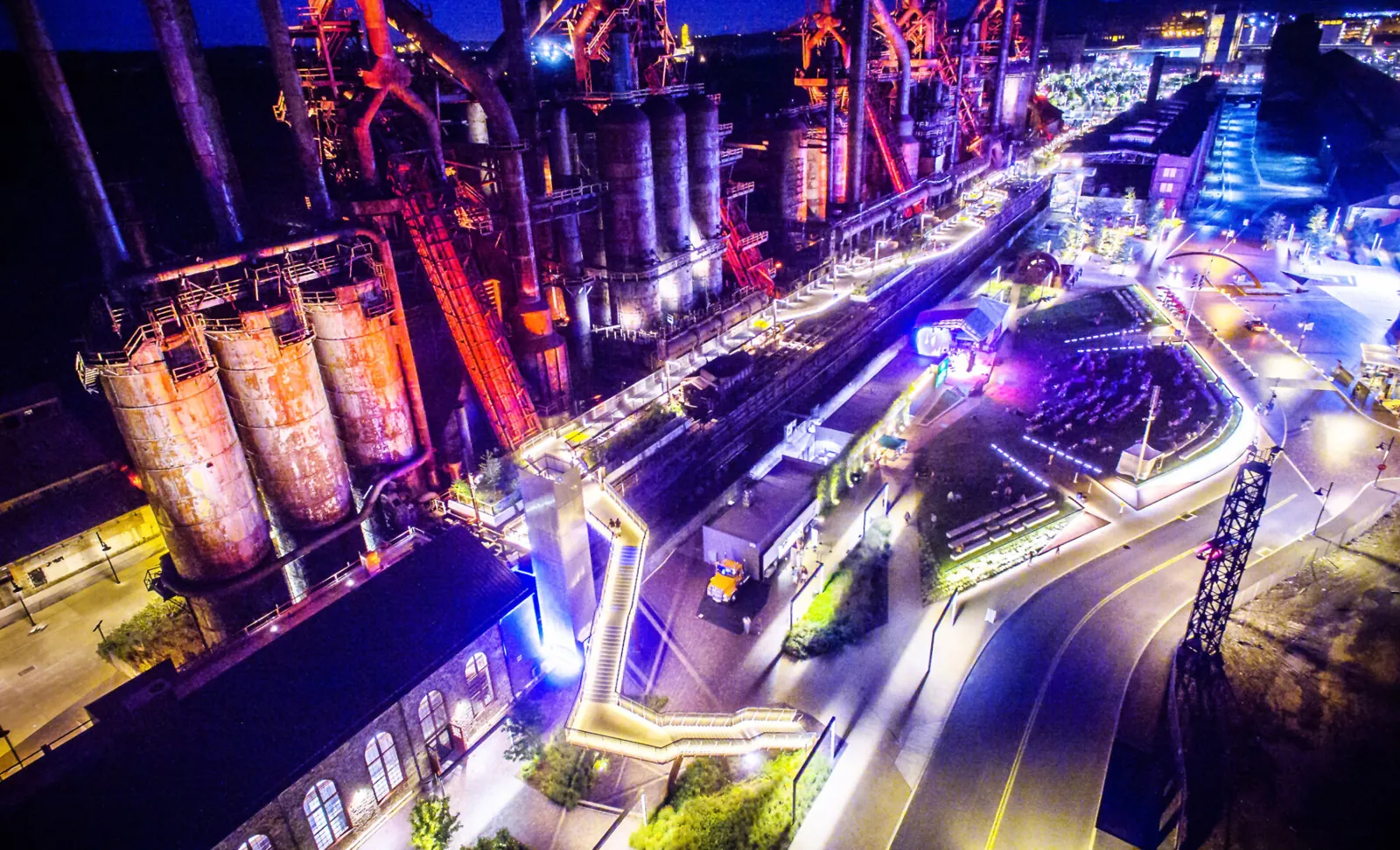
Night aerial view of the lit blast furnaces and the SteelStacks campus
A night aerial view shows the blast furnaces and ore bins lit in violet and blue, with the...
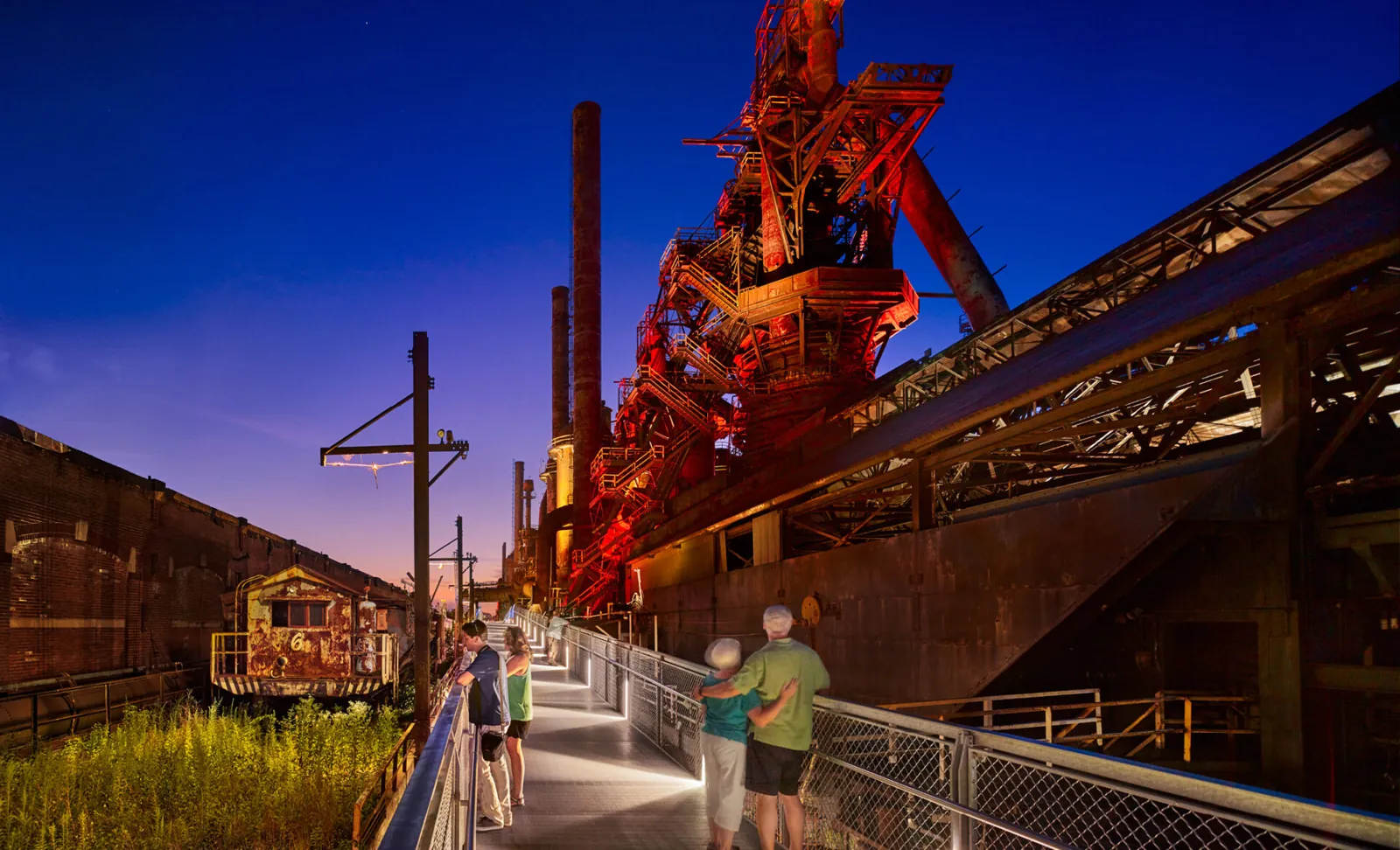
Dusk visitors at the mesh railing under a red-lit furnace
At dusk a couple lean on the mesh railing of the walkway, looking at a blast furnace lit in red...
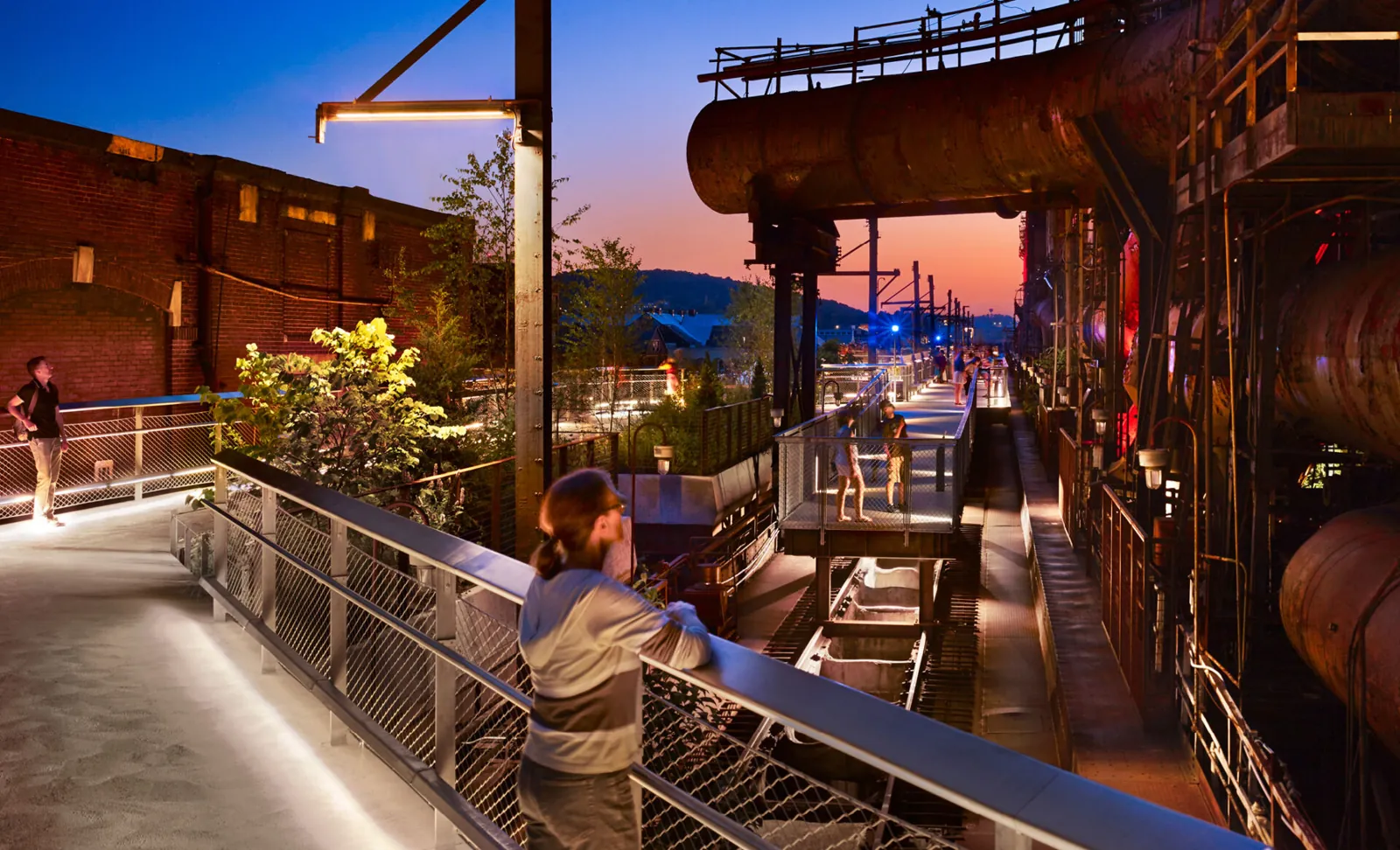
Girl at the railing looking down into the ore bins at dusk
A girl leans on the railing of a lit walkway at dusk and looks down into the old ore bins. A...
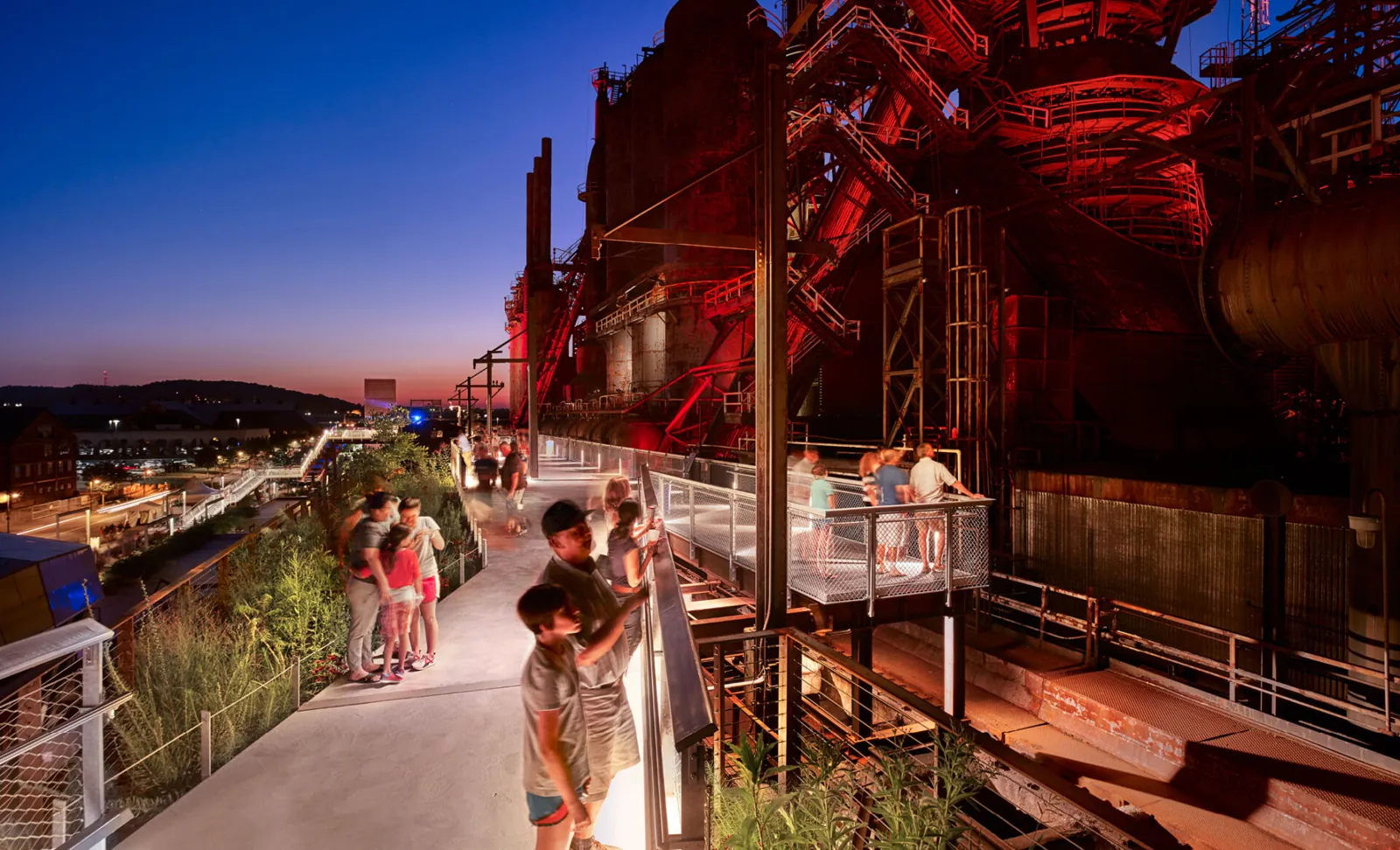
Family on the walkway beside a viewing platform and native grasses
A family stops on the walkway at dusk, with children at the railing looking toward a viewing...
Daytime walkway with a timber bench and an interpretive sign
In daylight a visitor walks along the pale concrete path of the trestle between mesh railings...
Steel stair from the platform with lush planting and a brick building
A steel stair descends from a landing on the trestle past lush summer planting, with visitors on...
HMT entrance sign in weathered steel above the old tracks
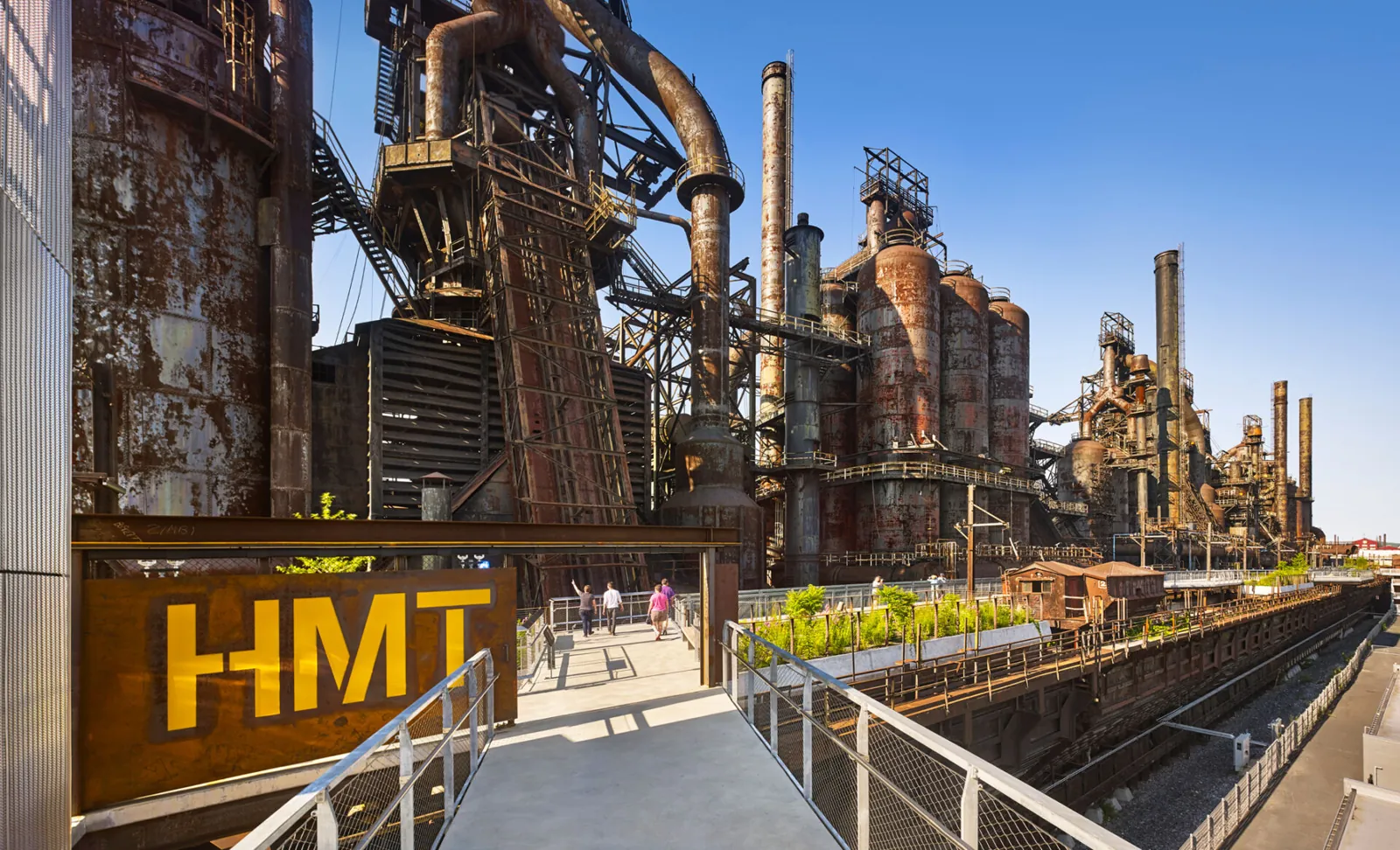
The yellow HMT lettering is cut into a weathered steel sign at the entrance to the walkway...
Rust-coloured steel stair rising through tall grasses toward the trestle
A steel stair on rust-coloured supports rises through tall grasses toward the trestle, with the...