
Bristol Airport has opened a £10m energy centre where 22 air source heat pumps and one electric boiler replace the terminal's gas boilers.
A live airport terminal is now heated and cooled without gas: Bristol Airport's new energy centre runs on 22 air source heat pumps backed by a single electric boiler.
What it means for MEP designers
Retrofitting a large, always-occupied building is where heat pump schemes usually get hard: you cannot shut the terminal down, plant space is tight, and the existing emitters were sized for boiler flow temperatures. Moving the plant into a prefabricated module outside and feeding the building through buried mains is a sensible way round that. The electric boiler is the honest part: peak and resilience backup, not a claim that heat pumps cover every hour. Refrigerant choice for this kind of outdoor plant is also moving fast, see the EU F-gas exemption for indoor monoblock heat pumps and the 40 kW CO2 heat pump water heater from ECO2 Systems. For low-energy buildings the cooling side matters too, as in the CIBSE and Passivhaus Trust guidance on active cooling.
Would you back up a heat pump retrofit of this size with an electric boiler, or keep a gas peak boiler for a few more years?
A live airport terminal is now heated and cooled without gas: Bristol Airport's new energy centre runs on 22 air source heat pumps backed by a single electric boiler.
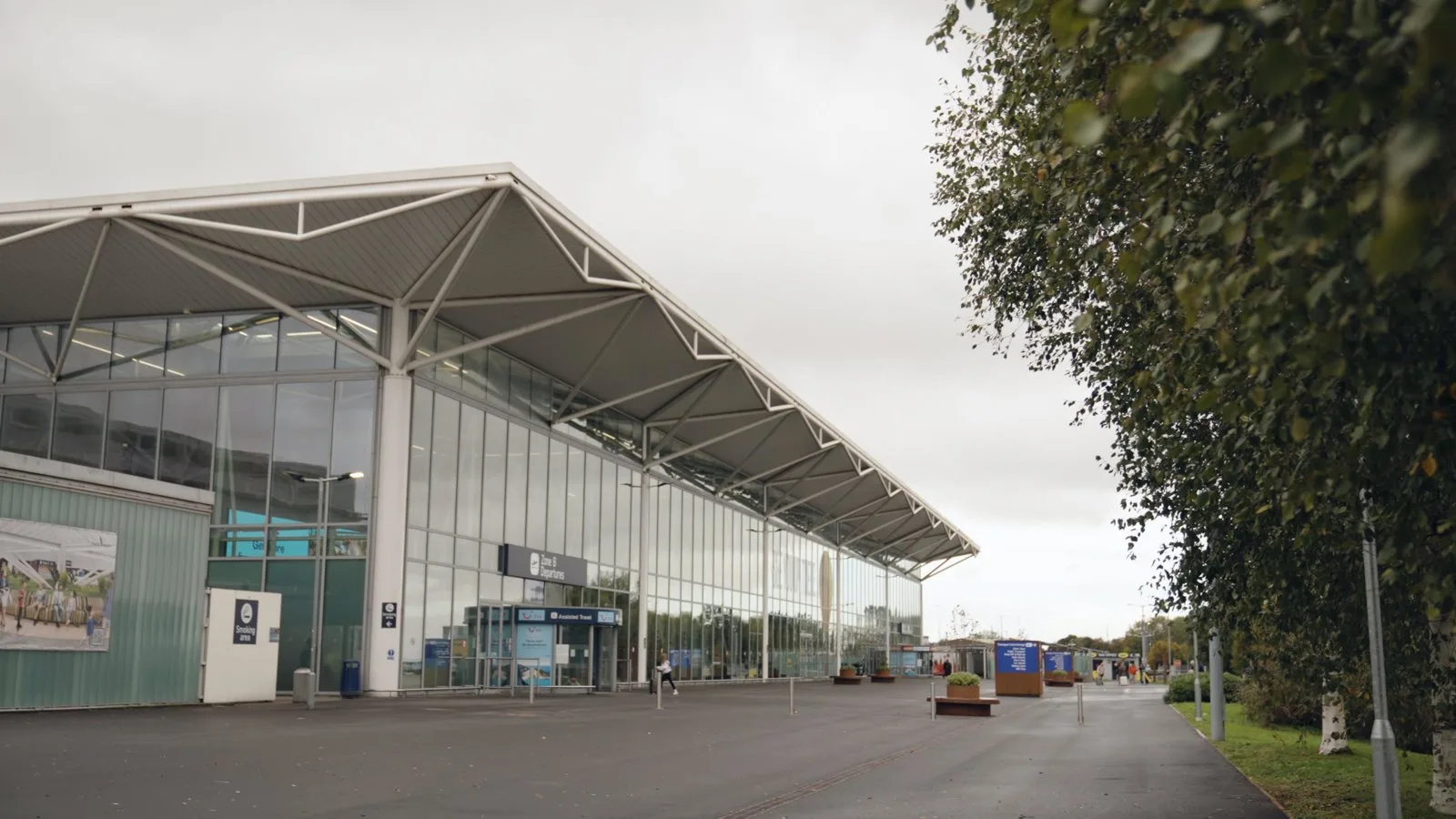
Bristol Airport energy centre with 22 air source heat pumps
Bristol Airport terminal building. A new 10 million pound energy centre with 22 air source heat...
- Investment: about £10m.
- Plant: 22 air source heat pumps plus one electric boiler, serving both heating and cooling of the terminal.
- The gas boilers inside the terminal have been removed.
- The modular energy centre was built off-site by NG Bailey; new underground pipework carries hot and chilled water to the terminal basement.
- Expected saving: around 625 tonnes CO2e per year, supporting the airport's goal of net zero operations by 2030.
What it means for MEP designers
Retrofitting a large, always-occupied building is where heat pump schemes usually get hard: you cannot shut the terminal down, plant space is tight, and the existing emitters were sized for boiler flow temperatures. Moving the plant into a prefabricated module outside and feeding the building through buried mains is a sensible way round that. The electric boiler is the honest part: peak and resilience backup, not a claim that heat pumps cover every hour. Refrigerant choice for this kind of outdoor plant is also moving fast, see the EU F-gas exemption for indoor monoblock heat pumps and the 40 kW CO2 heat pump water heater from ECO2 Systems. For low-energy buildings the cooling side matters too, as in the CIBSE and Passivhaus Trust guidance on active cooling.
Would you back up a heat pump retrofit of this size with an electric boiler, or keep a gas peak boiler for a few more years?